
Secrets of Using A Metronome for Practice
I’m sure you’ve heard about how incredibly effective (and annoying) it is to practice with a metronome. Most books and teachers make it abundantly clear that using a metronome is a great way to improve your timing.
This is true and I can advocate for it as well. But did you know that there are other HUGE benefits to using a metronome? Let’s take a look at how a metronome can help improve your playing…
A Great Goal Setting Tool
It’s been proven time-and-time again that goals need to be specific and measurable. If you don’t know exactly WHAT you are trying to achieve, how will you know WHEN you have achieved it?
Now, I use my metronome all the time to help me set SPECIFIC goals to reach when developing my guitar technique. For example, let’s say I want to increase the speed at which I can play a particular exercise or particular riff. I would use a metronome and set an EXACT speed (e.g. 160 bpm) I want to reach for that goal.
While I may start out at a comfortable pace of 80 bpm, I slowly develop and increase my speed over time until I reach my goals.
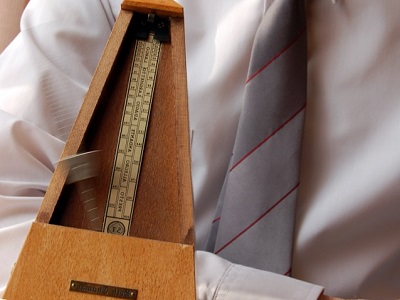
Progressive Realization Of Goals
Metronomes allow you to progressively achieve your goals in speed guitar playing. What do I mean by this? Put simply, it means start slow and GRADUALLY increase the speed of your metronome. For example, let’s say you want to get a particular lick up to 200 bpm.
You could first master the lick at 40 bpm. Once mastered at this speed you could then increase the metronome speed to 42 bpm, then 44 bpm, then 46 bpm. You get the idea! You would work up to the target speed incrementally over a period of days, weeks or even months.
Every time I manage to increase by playing speed by 4 bpm, I feel a sense of satisfaction and accomplishment. Can you see how powerful this is? The metronome setting gives you a clear and tangible target to aim for!
Developing Listening Skills And Musical Phrasing
One vital skill to develop is the ability to play along in-time with other people you are jamming with. This is especially true in jazz, where a large proportion of the song may be improvised on the spot!
Obviously, you’ll develop your listening ability more fully by playing with other musicians, but playing with a metronome will definitely help as well. The metronome is a great tool to start with and can help build your confidence before you start playing with real people.
Metronomes can really help you develop this listening skill and help you build up an innate ability to get the “groove”. As you practice listening to the clicks of your metronome, you will get better at playing in-sync with drum beats and rhythms.
Hopefully, this article has inspired you to dust off your metronome and start using it more often. Practicing a passage of music for 10 minutes with a metronome is far more effective than practicing it for 2 hours without a metronome. Now, go practice hard and have fun!
Looking For Step-By-Step Video Guitar Lessons?
Trusted by 200,000+ students, Jamorama is the leading provider of guitar courses. If you are looking for a fun way to learn the guitar and want to play-along to your favorite songs, check out Jamorama today…

Related Articles



We Recommend…

Leave A Comment